
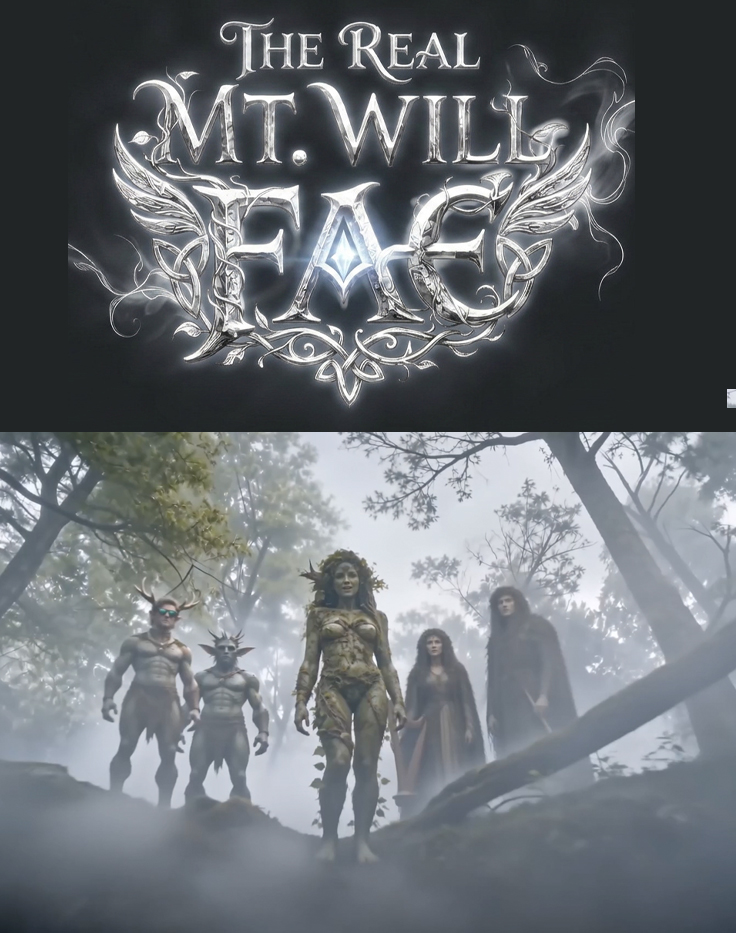
Director's Statement
Mt. Will is a real mountain behind my actual house on 80 acres in western Maine. I've walked that trail more times than I can count, always wondering what might be living in those woods just out of frame. Mt. Will Fae is my answer — arrived at by refusing to plan.
My last AI film, Freewheeling, was a controlled experiment: I knew where I was going. This time I wanted the opposite — no script, no outline. I handed the AI a cast of characters — the Green Woman, the Thorn Man, the Dryad, the Nest Woman, the Crystal Faery, a cranky dragon, and a sunglasses-wearing "valet" with something to hide — and let the story wander like a jam session. I wanted wild, untamed input. I got it, and the film is funnier for it.
That didn't shrink my job as director — it expanded it. With no script to fall back on, I was the one deciding, scene by scene, what belonged, out of a lot of generated material that didn't.
Tonally, I wanted mythic and mundane sitting shoulder to shoulder: a dragon with strong feelings about watermelon tourmaline. A king exposed not by prophecy but by a Dunkin' Donuts Irish coffee latte. An actual valet who finally shows up late, with Girl Scout cookies and correct change, unbothered by the chaos he missed.
The ending recontextualizes everything before it — I won't spoil it, except to say it grew from the same "stay open" instinct as the rest.
One part that wasn’t created with AI: the score, from two mid-90s albums by Forest Floor, an improv ensemble I played in — recorded live to analog tape, no overdubs, thirty years before this film or its AI existed. Dropped under AI-generated Fae folks, it fit disturbingly well — both were made the same way: nobody fully in control, everybody figuring it out in the edit.
That's the whole film, really: two tools thirty years apart, both used for improvising instead of executing, meeting on a mountain that's been sitting behind my house the entire time.